Close
Close
 Back
Back


Conveyor lines: essential for maximizing warehouse performance

Whether you’re connecting different warehouse zones or moving goods across multiple levels, automated conveyor systems for boxes and pallets are essential for fast, reliable transport. Roller and belt conveyor lines can be used to automate specific areas or serve as the backbone of a fully integrated warehouse system. Modern systems deliver high-speed transport, precision handling, reduced reliance on manual labor.
As a conveyor systems manufacturer we design and manufacture conveyor devices to handle a wide variety of goods, including: boxes, trays, and cartons, pallets, small items in soft packaging, bags, or envelopes.
We manufacture warehouse conveyor systems using high-quality, certified materials to ensure long-term reliability and performance. Featuring a modular design, systems from a conveyor equipment manufacturer are quick to install, easy to integrate into existing warehouse operations, and fully scalable to support future expansion. Each system is fine-tuned during commissioning to match your warehouse’s specific operational needs, including speed and direction of movement. When needed, reverse transport is enabled via electric drives with variable rotation, offering added flexibility in goods handling.
Factory conveyor systems deliver:
- full automation of goods handling processes within the warehouse;
- optimal use of space through vertical, spiral, and inclined transporter lines;
- safe, reliable transportation of bulky items and palletized goods from storage to sorting and shipping;
- seamless integration with WMS, AS/RS, sorting systems and other devices;
- lower operating costs thanks to energy-efficient performance and dependable equipment;
- improved working conditions by reducing physical strain on staff.
Automated systems are critical for boosting warehouse productivity across sectors like e-commerce, retail, pharmaceuticals, automotive, and manufacturing (factory floor or factory automation).
Conveyor types
- powered rollgangs for pallets and cartons;
- gravity (non-driven) rollgangs for efficient, low-energy movement;
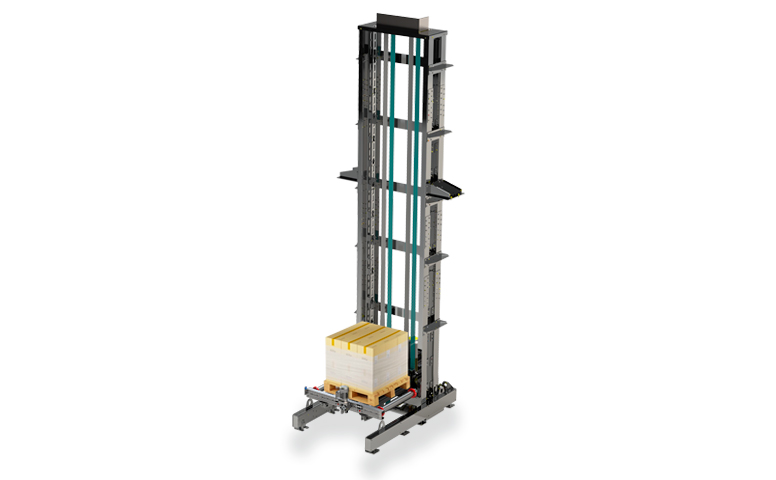
- vertical conveyors for lifting and lowering boxes between levels;
- elevators for pallets for smooth vertical transportation of heavy loads;
- belt conveyors for handling small and lightweight items;
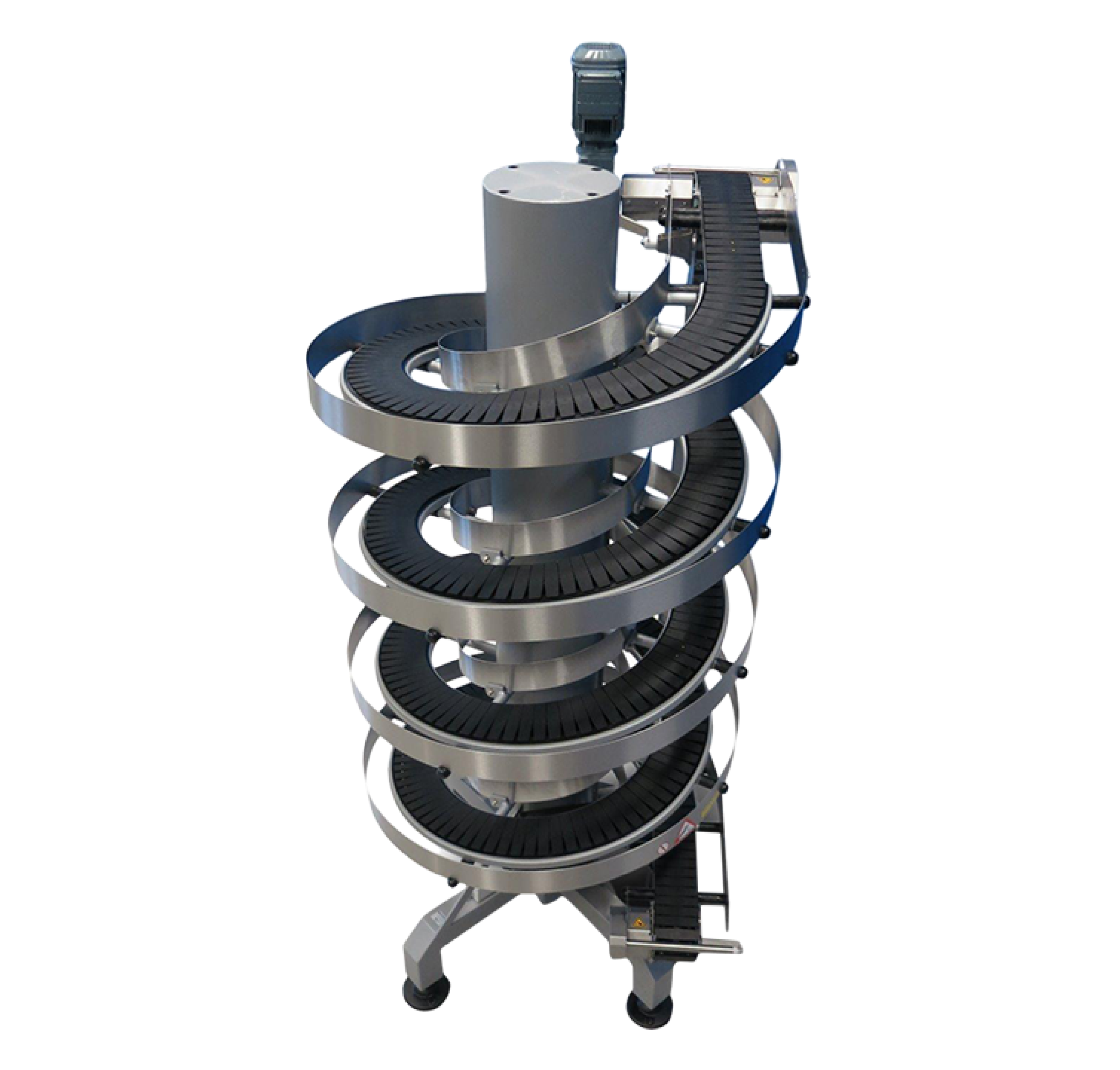
- spiral conveyors for continuous product flow across multiple mezzanine levels.
At KAPELOU conveyor manufacturer, every conveyor system for pallets and boxes is custom-manufactured to fit your specific processes. Our technologies are based on a detailed analysis of your product types, movement speeds, operating environment, and business goals. That’s why companies choose KAPELOU supplier - to get a thoughtfully engineered system that delivers reliable performance, day in and day out.
The uninterrupted operation of a conveyor system for boxes and pallets relies on the quality and durability of every equipment component, seamless integration with warehouse systems, and consistent maintenance tailored to businesses' real-world conditions.
 Vertical pallet conveyor
 Belt conveyor
 Driven pallet conveyor
 Box conveyor systems
 Non-driven roller conveyor
 Spiral conveyor
 Vertical conveyor for boxes

 With KAPELOU conveyor systems, you're investing in efficiency you can count on
Why partner with a KAPELOU provider?
KAPELOU conveyor manufacturer provides the end-to-end approach for businesses to automating warehouse processes - no matter the scale or complexity:
- deep analysis of your operations - as a conveyor systems manufacturer we begin with a thorough assessment of your warehouse workflows to design automation solutions that directly address real-world business challenges;
- full-cycle implementation - from concept development and in-house equipment manufacturing to system integration and long-term service support, we manage every stage of your automation journey;
- proven experience and strong reference - with more than 850+ projects, as a conveyor systems supplier we’ve helped companies across various industries boost warehouse efficiency and productivity;
- in-house equipment manufacturing - as a manufacturer of conveying systems we manufacture conveyors for boxes and pallets at our own facilities using high-quality raw materials and in full compliance with international and European standards;
- reliable service - we provide ongoing technical support and maintenance throughout the entire lifecycle of conveyors for boxes and pallets;
- flexible, modular equipment design - our systems are manufactured to scale, so they can grow with your business and adapt to evolving operational needs.

 CloseClose
 Close
Close