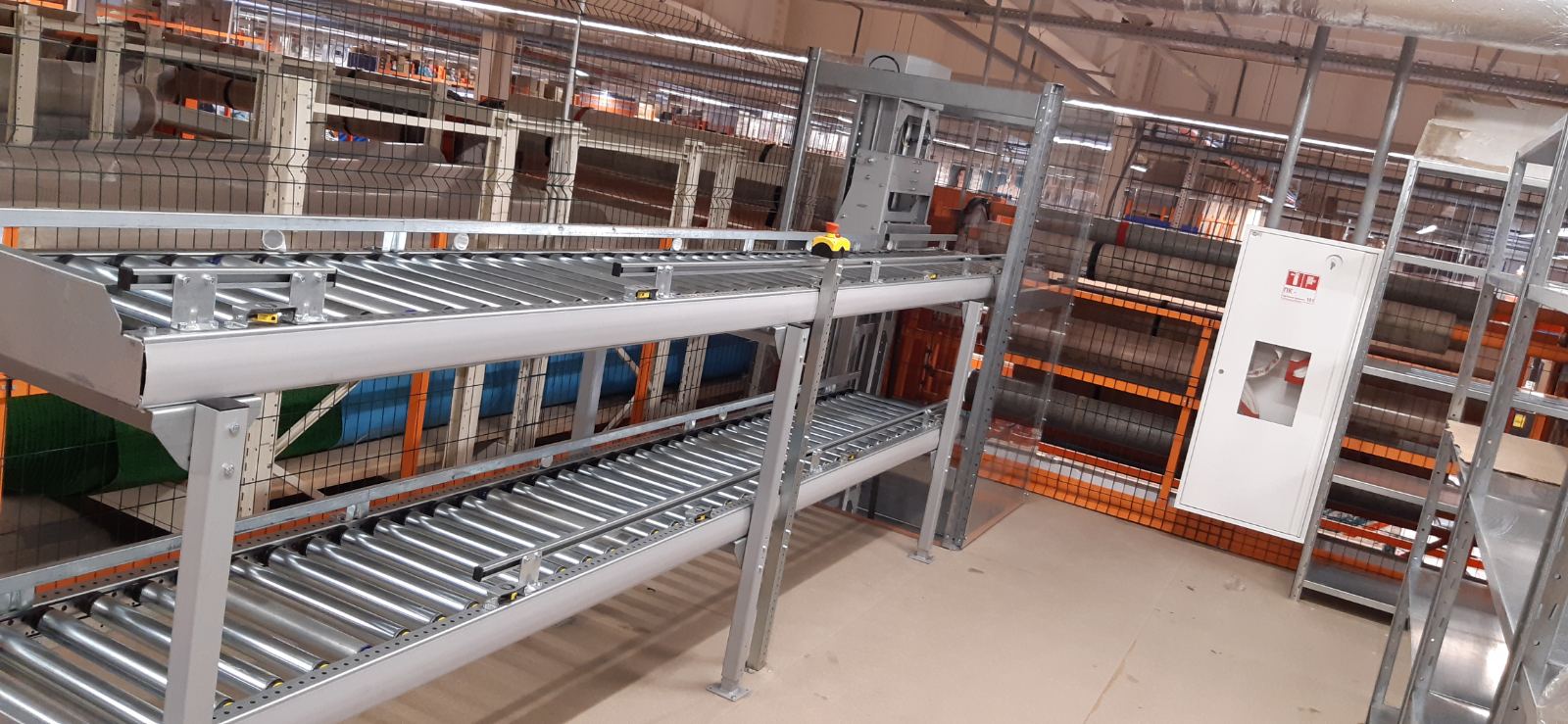
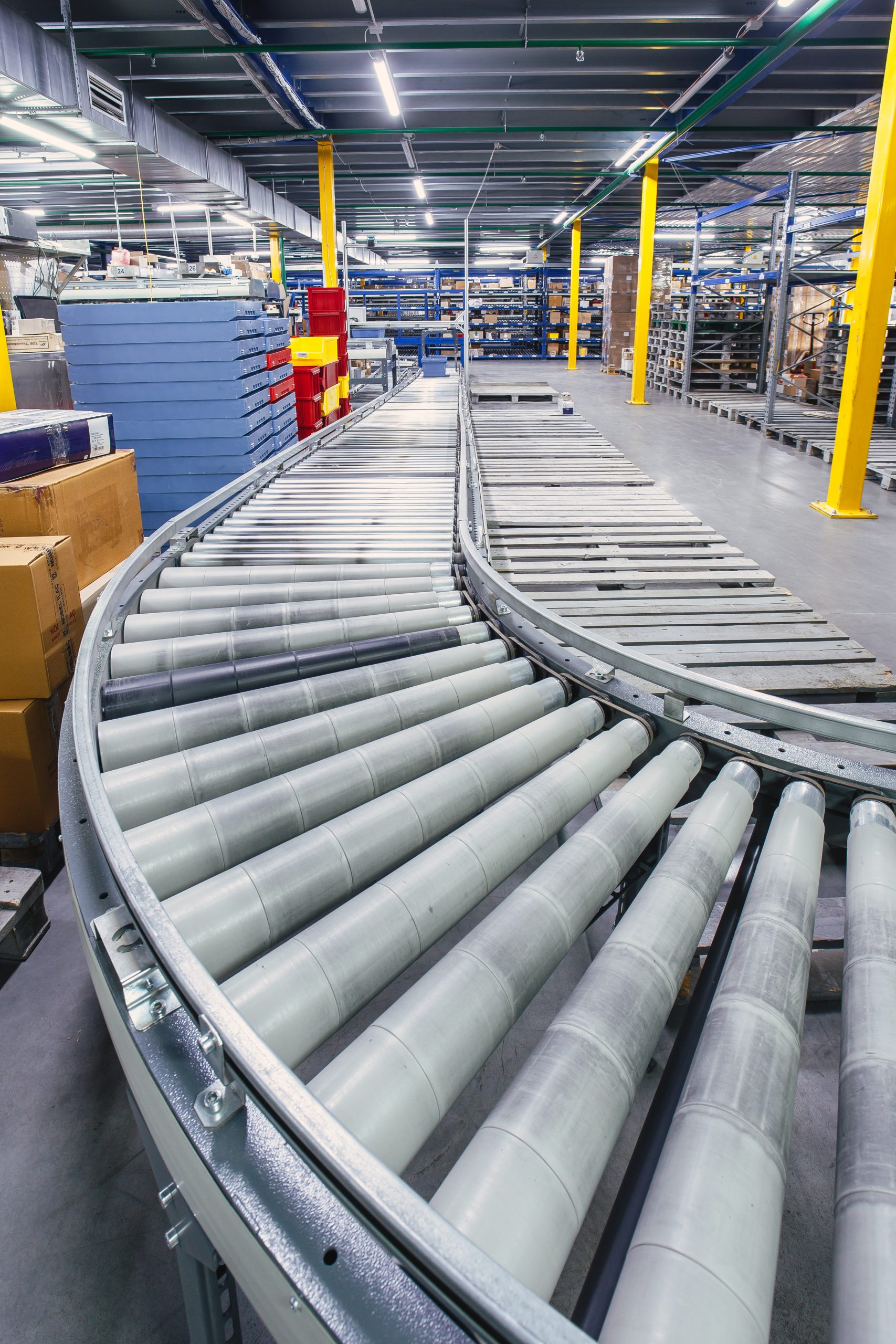
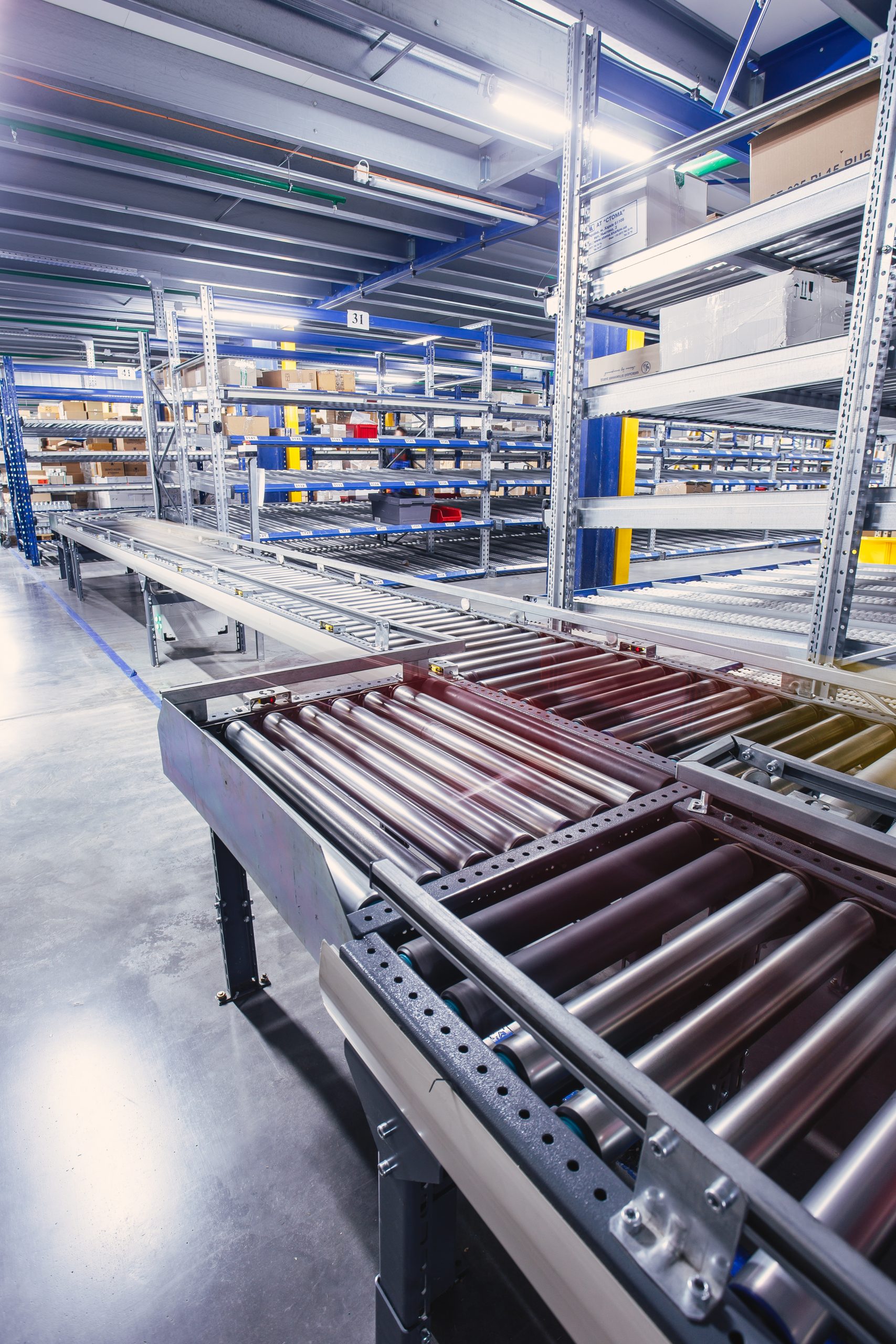
What makes KAPELOU Smart roller conveyor better than its counterparts?
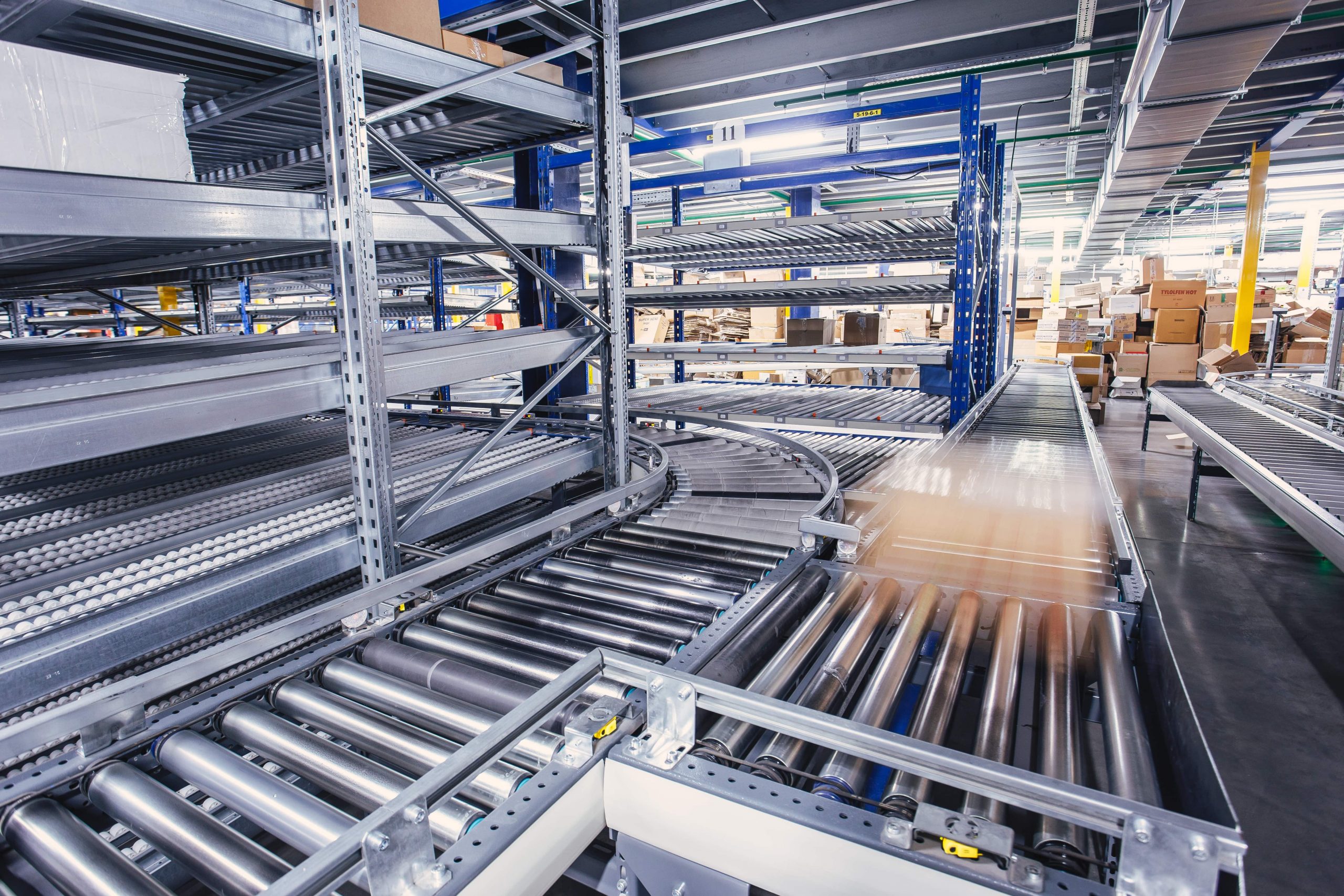
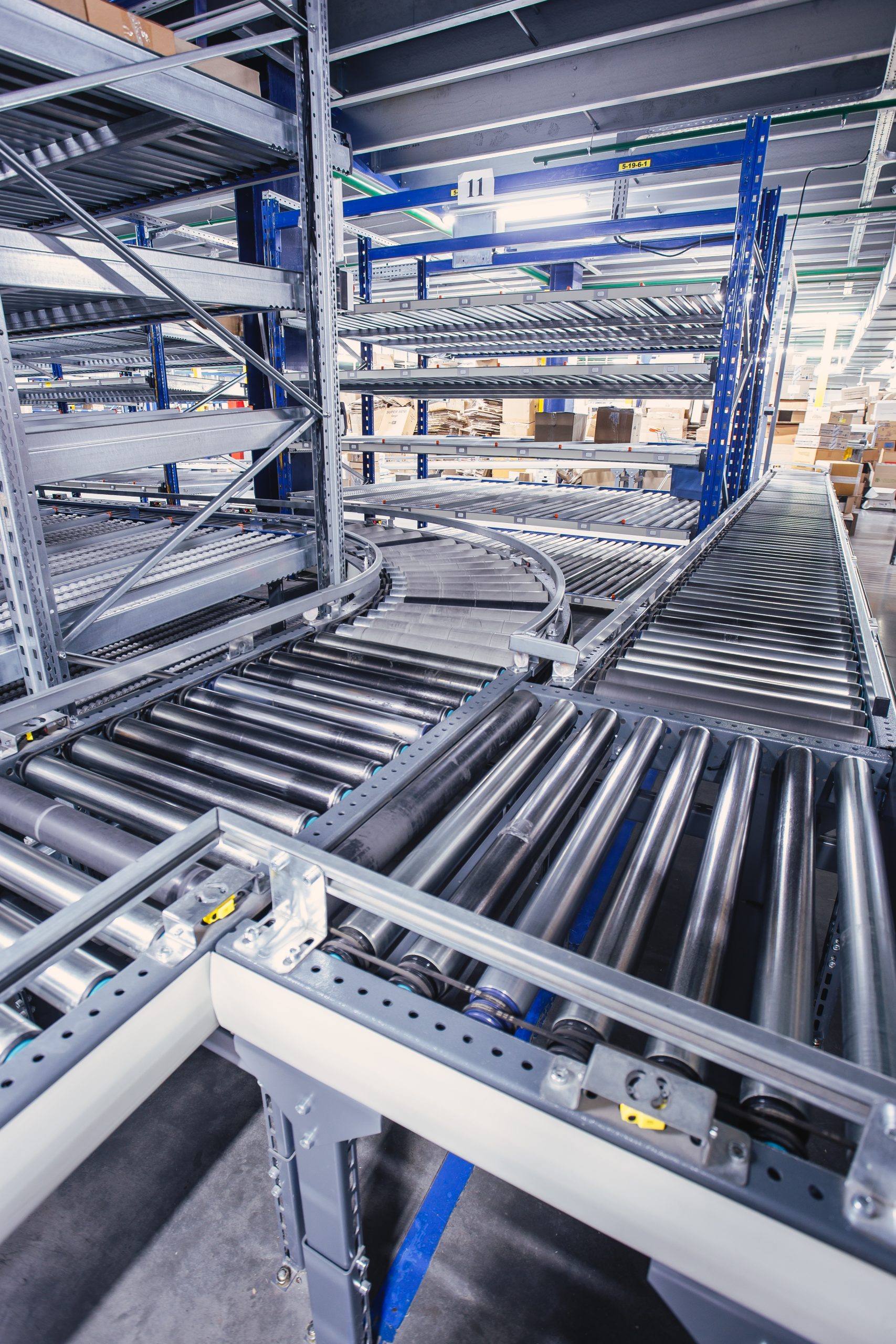
A roller conveyor is a highly efficient, modular transport system designed for continuous energy-saving movement of goods. It integrates into existing warehouse workflows and enables system scalability in line with business growth.
When choosing a powered roller conveyor for transporting boxes, the key factor is the reliability of the provider, capable of adapting the technology to the specific characteristics of the cargo flow, type of packaging, and operating conditions. Speed, precision, and low maintenance requirements set our powered roller conveyor apart from other equipment on the market.
Key advantages include:
- optimized conveyor length utilization – dynamic load distribution control through the ability to pause individual logic zones of the rollers conveyor line when transporting totes;
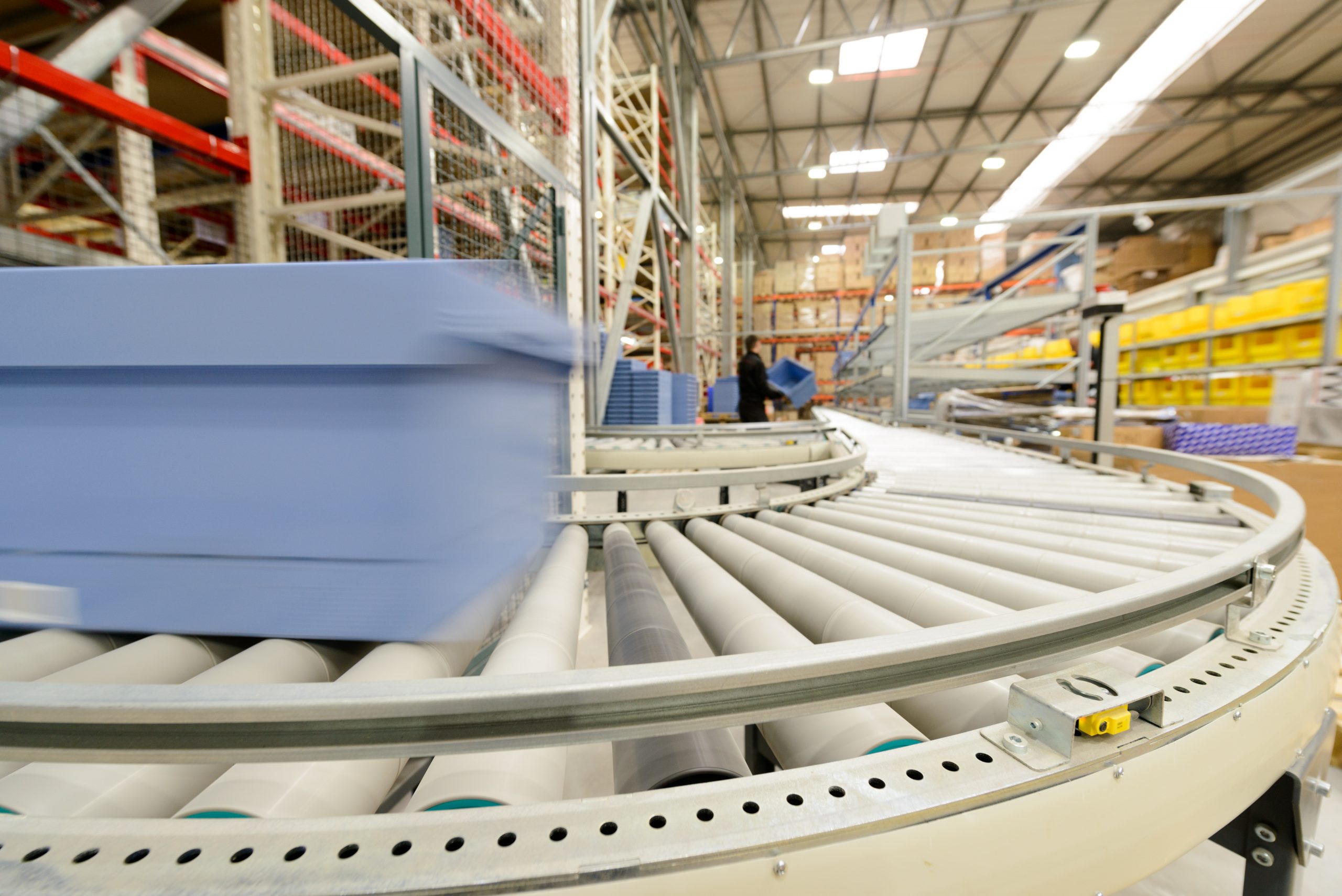
- load preservation with ZPA logic – the carton conveyor system features Zero Pressure Accumulation (ZPA) technology ensuring safe spacing between containers by stopping specific rollers sections of the conveyor;
- modularity and adaptability – built from interchangeable modules that can be extended or reconfigured to match operational needs. Adapts to the specific requirements of warehouse logistics;
- versatility – rollers transport efficiently a wide variety of loads, including plastic totes, cardboard boxes, and transport containers;
- cost reduction – energy-efficient zone-based conveyor operation using 24V DC motors powers only the necessary rollers sections of the box conveyor line significantly reducing energy consumption;
- high reliability under peak loads – engineering to international standards the conveyor features a durable frame designed to withstand intensive use with minimal maintenance;
- safe working environment – by eliminating the need for manual handling significantly reduces the risk of workplace injuries;
- seamless integration with automation systems – the powered conveyor is fully compatible with robotics, vertical conveyors, sorters, and packing systems, making it a vital component of any automated infrastructure.
KAPELOU conveyor modules
The conveyor equipment is delivered in the form of prefabricated ready-to-assemble modules, which makes the installation procedure much faster.
Modular powered roller conveyor is a key component for the creation of automation systems of any complexity. Vertical conveyors for boxes are installed where it is necessary to move items between platform and mezzanine levels.
- straight roller conveyor;
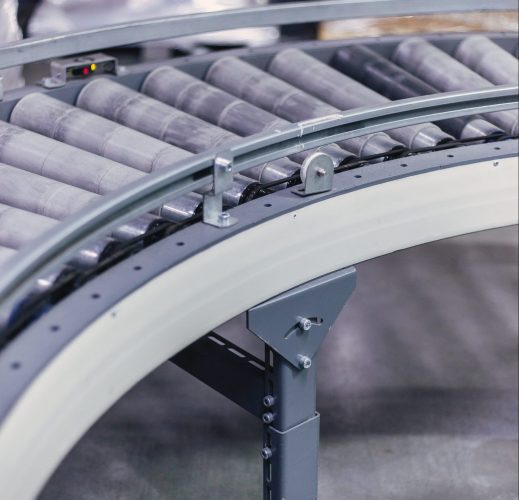
- curved roller section (90⁰ / 60⁰ / 30⁰);
- merge rollers section (30⁰ / 45⁰ / 90⁰);
- hinged rollers section;
- dimensioning and weighing module.
Specifications of the driven roller conveyor
Driven roller conveyor from KAPELOU - reliable and proven solution for boxes
Smart design of the powered roller conveyor enables local replacement of any element without the need to stop the entire carton conveyor system. This minimizes downtime and ensures high conveyor reliability, even under peak loads in warehouses.
Here are some features that ensure improved reliability of the roller conveyor:
- Life time of the powered roller makes 70-120 thousand machine hours, and life cycle of the entire rollers system — more than 10 years.
- The powered conveyor features hot swap controller functionality: faulty controller is easily replaced without the need for programming or changing any other settings.
- Each powered roller ensures motion of items within a certain conveyor zone. In case of failure of any element of the conveyor rollers zone, only one zone stops, while the rest ones keep working.
The conveyor system for boxes features next-generation controllers and powered rollers that enable precise speed adjustments of the conveyor for totes. It ensures smooth acceleration and deceleration, reducing rollers wear, protecting mechanical components, and lowering energy consumption.
In the competitive market of automated intralogistics many suppliers offer conveyor equipment. However, it’s essential to choose a provider that specializes in box handling technologies and understands the nuances of package dimensions, weight, and throughput requirements. If you’re searching for a reliable automated conveyor for boxes or plastic containers, we recommend a powered carton conveyor – customized to fit the layout and operational needs of your warehouse.
Investing in a powered carton conveyor means achieving safe, efficient, and dependable transport of goods in boxes, totes, or containers. This packaging line conveyor significantly reduces staff manual labor while accelerating order fulfillment without compromising accuracy. To guarantee precise positioning of boxes for scanning or packaging, the system includes a length stop – a mechanical element that functions as a physical barrier at a designated point along the box conveyor solution. Thanks to their modular design, our roller conveyors require near-zero maintenance, keeping service costs low and maximizing uptime and overall line productivity.
Powered conveyors are widely adopted across industries such as pharmaceuticals, retail, distribution, e-commerce, FMCG, food & beverage, automotive, 3PL logistics, as well as postal and courier services. Box roller conveyors integrate into production lines, moving containers efficiently from the assembly machine to the packaging module.
The conveyor cost depends on multiple factors: total length, load capacity, rollers type, drive system, speed requirements, additional modules, cargo characteristics, and warehouse layout.
Roller conveyor: speed and scalability - a case study for a pharmaceutical distributor
Ametrin FC LLC, one of Ukraine’s leading pharmaceutical distributors, entrusted us with the automation of its warehouse operations in response to rapidly growing order volumes. At the heart of the project is the integration of powered carton conveyors manufactured in our factory. The result? A new standard of efficiency in transporting plastic totes weighing up to 35 kg via rollers between picking, packing, and shipping zones.
Key benefits of conveyor-based modernization:
- continuous precise material flow between warehouse zones and levels, thanks to carton conveyors;
- faster order processing – no need to scale up staffing;
- reduced internal logistics costs through automated box conveyor systems;
- less manual handling means lower physical strain and improved ergonomics for warehouse staff;
- implementation of Goods-to-Person technology – the product moves to the operator via carton conveyor rollers, not the other way around;
- optimized warehouse space – hinged conveyor sections rollers maintain clear walkways for personnel and equipment;
- system scalability – the heavy-duty box conveyor is built to scale alongside growing logistics demands.
The outcome is a fully automated warehouse that performs with speed, consistency, and resilience, even during peak loads. And with a future-ready design the box conveyor system allows for expansion without compromising processing quality. Explore the full automation case of Ametrin’s warehouse: “Technologies that scale: Transformation without reconstruction.”
Roller conveyor in action: what equipment rollers work best with
Maximum product handling efficiency can be achieved when the automated box conveyor is integrated as part of a comprehensive warehouse automation, working seamlessly with the following systems:
- AS/RS and shuttles – conveyors move cartons to and from automated storage and picking zones, accelerating throughput and supporting Goods-to-Person workflows;
- sorters – powered conveyors deliver cartons to sorting zones and route them to the next processing stages;
- AMRs / AGVs – automated box conveyors line links with mobile robots to enable fast, coordinated carton transport across the facility;
- weighing modules and barcode scanners integrated along the rollers line for precise order verification and quality control in the picking process;
- lifts and vertical conveyors with rollers line – in dispatch zones, they automate vertical carton movement, reducing physical strain on employees;
- pharmacy automation robots paired with rollers conveyor lines, they ensure smooth, accurate flow of carton and boxes, drastically cutting manual labor, and boosting fulfillment speed in high-volume pharmaceutical industry.
Order a turnkey roller conveyor
Our conveyor systems for boxes and cartons are tailored to your specific operation. Pricing is based on key factors such as your warehouse layout, load characteristics,rollers types, and the complexity of your logistics processes - ensuring cost-effective and customized box handling conveyors.
From initial consulting and carton conveyor equipment design to system manufacturing and on-site installation, we manage every stage of the project and take full responsibility for the outcome. You can count on our powered conveyors for boxes to deliver maximum efficiency and reliable performance, even in the most demanding environments.
Turnkey modular box conveyor systems. We put together all stages of the warehouse automation solution development: consulting, production of carton and box conveyor systems, installation, commissioning and service support.
Team approach.Specialists of our Project and Design departments, Mechatronics department, Assembly and maintenance department jointly work on the development of the project and its implementation. Besides, each project is controlled by a project manager. This ensures in-depth and complex analysis of the project tasks, selection of optimal rollers conveyors for boxes and their sound implementation.
High quality of the equipment. We purchase profile steel from Holland, controllers from Japan, and rollers from Germany. All process operations within our factory are performed by qualified professionals on DMG MORI and TRUMPF (Germany) metalworking machines, which guarantees precise machining of parts with accuracy up to 0.01 mm, and adherence to the scheduled time of manufacture.
Experience. We have produced and installed more than 57 500 m of conveyors, which almost equals the length of 144 running track circles at the NSC Olimpiyskiy sports arena.
24/7 service maintenance. Based on the maintenance servicing contract, incident response and maintenance team is assigned to each facility. This team regularly conducts preventive inspections and works, as well as promptly resolves any technical issues.

Driven roller conveyors are suitable for warehouses requiring stable, controlled, and continuous transport of bins and boxes.
This technology delivers maximum efficiency under the following conditions:
- high-velocity processes and intensive material flow: when the capacities of gravity lines or manual labor have already been fully exhausted
- a need for speed control: the motorized drive guarantees a constant, predictable travel speed for every single tote or tray
- complex routing logic: the system seamlessly enables buffering, automated sorting, and precise piece-by-piece feeding to subsequent processing stages.
Thanks to their modular architecture, driven roller conveyors synchronize with other conveyor types and seamlessly integrate into the overall warehouse management system.
The fundamental difference between these two equipment types lies within the mechanics of load movement:
- powered conveyors: an integrated gearmotor drives the rollers, enabling fully automated container transport at a strictly controlled, fixed speed. This makes them indispensable for high-velocity zones governed by complex logical algorithms
- non-powered (gravity) roller conveyors: lacking any mechanical drive, load displacement relies either on gravitational force (along inclined paths) or manual operator effort. This equipment serves as a simple, energy-efficient tool for short connecting routes, manual order picking zones, buffering, or auxiliary operations.
Motorized automation is chosen for continuous, high-speed flows, whereas gravity lines offer a cost-effective alternative for localized tasks and inline accumulation.
A single conveyor circuit can seamlessly handle totes and boxes of various dimensions and weights, provided its structural design is pre-engineered to accommodate the entire spectrum of potential loads.
The engineering process for such a multi-format line relies on a detailed analysis of technical parameters:
- data collection: engineers analyze the minimum and maximum footprints of the boxes, their weight, bottom geometry and stiffness, as well as the target throughput of the specific zone
- technical configuration: the engineering team calculates the optimal roller pitch, effective width of the track, gearmotor power rating, and automation control algorithms.
For continuous and safe system operation, two critical conditions must be met: the smallest box must always maintain at least three points of contact on the rollers, while the maximum heavy load must never exceed the rated capacity of the line’s mechanical components and structural frames.
Driven roller conveyors automate the transit of containers between internal zones, reducing manual load handling.
This technological upgrade fundamentally restructures labor time:
- reallocating resources to high-value tasks that directly impact customer satisfaction – such as error-free picking, final audits, and order verification
- mitigating staff fatigue: eliminating the repetitive lifting and carrying of heavy loads
- stabilizing operational pacing: automated displacement establishes a precise, predictable, and continuous workflow across all interconnected processing zones.
A powered roller conveyor transforms the warehouse into a balanced ecosystem where repetitive logistics tasks are seamlessly handled by machinery.
Integrating powered roller conveyors into an intralogistics ecosystem seamlessly automates the transit of totes, bins, and cartons.
This scalable conveyor architecture is engineered to master multifaceted logistics challenges:
- dynamic flow management: it streamlines the setup of buffering zones, enabling automated sorting and precise routing of high-volume material flows
- intelligent Track & Trace: operating in synergy with barcode scanners, advanced sensors, and PLC control algorithms, the system guarantees 100% visibility and closed-loop control over every single unit of tare in real time
- resilient KPI performance: by eliminating manual handling bottlenecks, the system sustains peak throughput across the entire warehouse footprint, ensuring operational continuity even during seasonal volume spikes.
Every conveyor line is engineered as a bespoke solution to match specific intralogistics requirements.
The primary cost drivers include:
- Physical Footprint & Capacity: total system length, effective width of the conveying surface, and maximum load capacity
- Kinematics & Material Profile: the geometry and traits of the conveyed assets, motor-gearbox types and power ratings, and required throughput speed
- Track Topology & Functionality: integration of buffering zones, sorting diverts, merges, curves, and vertical lifting modules
- Intelligent control layer: sensor density, control module complexity, automation level, and the depth of integration with the warehouse IT ecosystem (WMS/WCS).